
x

X
Transformative impact
of AI in Organisations

Transformative Impact of AI in Organisations | Executive PROGRAM
Transformative impact
of AI in Organisations
Programme Update: An Expanded Programme in 2027
Following growing interest, we have decided to take the opportunity to broaden the scope and ambition of the programme. This will allow us to bring together additional expertise and perspectives.
As a result, the programme has been rescheduled to the first quarter of 2027. We look forward to sharing more details as the expanded programme takes shape.
Q1 2027
PROGRAMME STATUS
Expanded programme in development
About the program
Artificial Intelligence is creating new possibilities for businesses and economies around the world. Many leaders are already experiencing its capabilities in their daily work, from analysing information and generating content to exploring ideas and supporting decisions. Yet these improvements in individual productivity have not necessarily translated into fundamental changes in how organisations operate, coordinate activities and create value.
Much of the way organisations operate today has been shaped by limitations we have learned to accept. Departments make decisions with incomplete information, businesses struggle to coordinate activities across value chains, and achieving scale often comes at the expense of flexibility. These arrangements are not necessarily the result of poor management. They reflect what has been practically possible with the information, technologies and resources available.
Artificial Intelligence, particularly when combined with developments in automation, connected technologies and digital infrastructure, is beginning to change these boundaries. For African organisations, this raises particularly important questions. How can AI help businesses become more productive, overcome longstanding constraints, compete more effectively and capture a greater share of the value they create?
The real opportunity therefore extends beyond individual productivity tools. It lies in understanding how new technological capabilities can support better decisions, improve coordination, transform existing business practices and open up entirely new possibilities for creating economic value.
The Transformative Impact of AI in Organisations brings together perspectives on technology, business, policy and economic development. Drawing on African and international examples, the programme aims to help participants explore AI’s transformative potential, challenge existing assumptions and make informed choices about its application within their own organisations.
At the heart of the programme is the ambition to move beyond understanding what AI can do, towards exploring how these capabilities could fundamentally change the way organisations operate, make decisions and create economic value.
Who should attend
How the program works
Our approach brings together expert perspectives, engaging discussions and opportunities to apply new insights to real organisational challenges.
As we expand the programme, we are exploring how additional expertise and perspectives can further enrich this learning experience, while retaining the emphasis on practical application and informed decision-making.
1. Learn from Experts
Explore Artificial Intelligence through a series of recorded executive masterclasses that bring together perspectives from technology, business, policy and economic development. Drawing on African and international examples, the sessions help you understand the possibilities emerging from AI and other technologies, and what these developments could mean for organisations and industries.
2. Engage with Faculty and Peers
Participate in live interactive sessions with faculty and fellow executives, where you can ask questions, challenge ideas and explore different perspectives. These discussions offer an opportunity to connect the concepts introduced in the masterclasses with practical business realities, while learning from the experiences and challenges of other participants.
3. Benefit from Personalised Coaching and Feedback
Throughout the program, you receive guidance and feedback as you explore potential AI opportunities within your own organisation. Through structured coaching and individual feedback on your work, the program team helps you challenge assumptions, examine possibilities and develop your thinking. The emphasis is on supporting your own analysis and decision-making rather than providing generic solutions.
4. Apply What You Learn to Your Organisation
Alongside the weekly learning modules, you develop your own AI Opportunity Project, applying the concepts and frameworks to an organisational context relevant to you. As the program progresses, you move from identifying possibilities to evaluating their potential value and practical requirements, culminating in a focused executive recommendation that you can take back to your organisation.
What you can expect…
Watch the short video for a brief introduction to the program and what you can expect over the course of the 4-week journey.
AI creates value not simply through what technology can do, but through what organisations learn to do differently.
Program schedule
Over four weeks, the program takes participants from understanding the capabilities of AI to exploring how it creates economic value, discovering opportunities within and beyond their organisations, and making informed choices about where to act. Each week combines learning, discussion and practical application to the participant’s own organisational context.
LEARNING WEEK 1
Understanding AI: Capabilities, Opportunities and Limitations
The program begins by exploring the different capabilities of Artificial Intelligence and how they are changing what organisations can understand, predict, create and decide. Moving beyond the current excitement surrounding generative AI, participants develop a broader perspective on the different forms of intelligence and their business applications.
Through African and international examples, participants examine how these technologies are already influencing organisations and industries, the limitations that still exist, and the foundations required to translate technological potential into economic value.
Topics include:
Understanding generative, predictive and decision-oriented AI
How AI differs from traditional analytics and automation
The opportunities and challenges for African businesses and economies
Recognising where AI capabilities could be relevant to your organisation
LEARNING WEEK 2
Seeing AI: From Intelligence to Economic Value
Understanding what AI can do is only the beginning. The next challenge is recognising how its capabilities can translate into greater productivity, better decisions, new business opportunities and economic value.
Participants explore how value is created and captured, looking beyond individual activities to understand the connections between processes, departments and independent businesses. Through examples from sectors such as agriculture, fisheries, logistics and healthcare, they examine how AI can improve existing operations, strengthen coordination and enable entirely new possibilities.
Topics include:
Understanding the economic potential of AI
Identifying productivity opportunities across organisational activities
Creating value through better coordination across value chains
Exploring new products, services and business models enabled by AI
LEARNING WEEK 3
Breaking Through the Assumptions That Shape Business
Many organisational structures, business practices and industry arrangements have developed around limitations that were once difficult or impossible to overcome. This week invites participants to question whether those limitations still apply.
Participants explore opportunities both within organisations and across the relationships between businesses. They examine how AI, alongside developments in robotics, connected technologies and digital infrastructure, can change the boundaries of what is possible. The focus extends beyond improving existing processes to reconsidering how activities, decisions and entire business systems could be organised differently.
Topics include:
Identifying the assumptions and constraints behind established practices
Exploring opportunities across business functions and departments
Reconsidering coordination and relationships between independent businesses
Discovering opportunities from the convergence of AI and other technologies
LEARNING WEEK 4
Making Informed Choices About AI Opportunities
The possibilities presented by AI are extensive, but not every opportunity is equally valuable, feasible or appropriate for a particular organisation. The final week focuses on developing the judgement needed to distinguish promising ideas from initiatives that deserve further investigation.
Participants explore how to assess potential value, examine practical requirements and consider the organisational conditions needed for success. Bringing together the perspectives developed throughout the program, they apply this thinking to their own AI Opportunity Project and determine sensible next steps for further exploration.
Topics include:
Assessing economic value, strategic relevance and potential impact
Understanding data, technology and organisational requirements
Considering implementation challenges, risks and responsible AI
Developing a focused recommendation and identifying practical next steps
Your AI opportunity project
A central ambition of the programme is to help participants connect new insights about AI with opportunities and challenges in their own organisations.
Rather than simply learning about technological developments, participants are encouraged to explore where AI could create meaningful value, challenge established assumptions and develop their own informed perspectives on the possibilities ahead.
The emphasis is on developing the understanding and judgement needed to identify worthwhile opportunities and make better-informed decisions about where to invest time, resources and attention.
Meet your program directors

Bitange Ndemo
Professor of Entrepreneurship | Former Ambassador & ICT Permanent Secretary
Prof. (Amb.) Bitange Ndemo has played a significant role in shaping Kenya’s digital transformation and innovation landscape. His career spans academia, public service and international advisory roles, bringing together technology, entrepreneurship and economic development.
Ndemo served as Kenya’s Permanent Secretary in the Ministry of ICT and, more recently, as Ambassador to Belgium and the European Union. As a Professor of Entrepreneurship at the University of Nairobi, he has combined academic insight with extensive experience in technology policy and institutional transformation.
He chaired Kenya’s Distributed Ledgers and Artificial Intelligence Taskforce and has contributed to international discussions on emerging technologies through advisory roles with the MIT Artificial Intelligence Policy Forum, the OECD and several UN organisations. His experience also includes advisory and board positions with Safaricom and Cenfri.
In the AI program, Ndemo brings a strategic perspective on technology, leadership and transformation, grounded in both African realities and international developments. He helps participants understand how AI can create new opportunities, reshape organisations and contribute to broader economic development.

Liesbeth Bakker
MBA, MSc
Liesbeth Bakker was trained in Operations Research and Artificial Intelligence in the 1990s, long before AI became a mainstream topic in business. Since then, she has spent more than two decades working at the intersection of analytics, technology, and business decision-making.
“If your operations don’t work, AI will only make the chaos more visible.”
Her career spans senior roles in international corporations, including Philips and Orange Business Services, where she worked on pricing strategy, digital transformation, and large-scale data-driven decision systems. Over time, her interest shifted from the technology itself to the deeper challenge of how organizations actually integrate analytics and algorithms into the way they operate.
In this program, Liesbeth brings a practical perspective grounded in both technology and operations. Rather than focusing on AI as a trend, she guides participants through how analytics, optimization, and machine intelligence can be integrated into real business systems — from operations and supply chains to pricing and strategic decision-making.
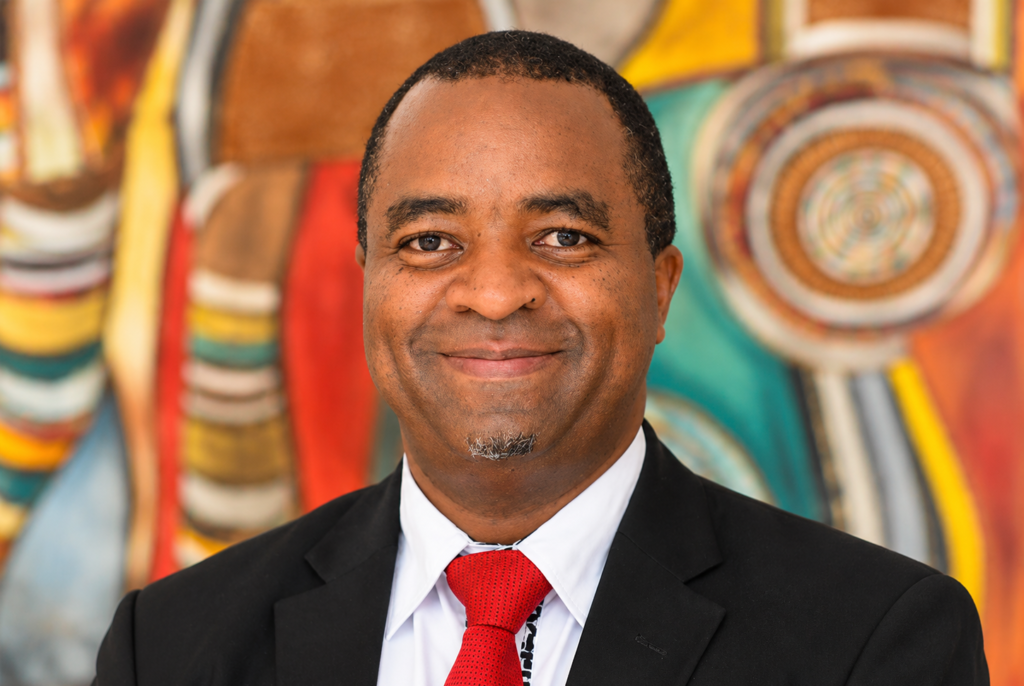
Martin Mbaya
Doctoral Fellow Strathmore Business School
Martin Mbaya is a Doctoral Fellow at Strathmore University Business School. He teaches and conducts research on entrepreneurship, innovation, public policy, trade and sustainability. He holds degrees from MIT (S.B. Mechanical Engineering), Harvard (MPP International Trade and Finance) and the University of Pretoria (PhD Technology and Innovation Management). He is also a 2021–2022 Fellow of the Global Alliance for Ethics and Impacts of AI & Advanced Technologies (GAEIA).
Martin is a co-founder of Akili AI, where he serves as a Non-Executive Director focused on business development, governance and fundraising for the start-up in Africa and North America. Martin was previously a co-founder of Nairobi Capital Inc. (a 2009 start-up of the MIT Venture Mentor Service and a 2010 finalist in the initial MassChallenge accelerator). Martin has served on multiple organisational boards, including: African Centre for Technology Studies (ACTS); African Population and Health Research Center (APHRC); Calestous Juma Legacy Trust Kenya (CJLTK); Raspberry Pi Foundation Kenya (RPFK); Adebisi Babatunde Thomas Entrepreneurship Institute (ABTEI); Zeraki Inc. and Alliance High School (AHS) Endowment Fund.
Martin is a 2015 Tutu Fellow, an MIT Startup Exchange member since 2025, a Harvard Alumni Entrepreneurs member since 2026, and a co-founder of the MIT African Internet Technology Initiative (AITI) in 2000.
Questions about the program?
Find answers to some common questions about participation and registration below. Have another question?
Contact the program team.
When will the programme take place?
The next launch of The Transformative Impact of AI in Organisations is anticipated in the first quarter of 2027. Updated dates and programme details will be announced as the expanded programme takes shape.
Can I already register my interest?
Absolutely! We welcome your interest in the 2027 programme. Simply select Keep Me Informed and leave your details. We’ll share updates on the expanded programme, including the curriculum, dates and registration arrangements as soon as they become available.
Who is this program designed for?
The program is intended for business leaders, senior managers and professionals who want to understand how Artificial Intelligence could create value within their organisations. It is relevant across business functions, including operations, finance, strategy, marketing and technology, and is particularly useful for people involved in making decisions about organisational performance, innovation and future investment.
Do I need technical or programming experience?
No technical background or programming experience is required. The program approaches AI from a business and leadership perspective, focusing on understanding its capabilities, recognising opportunities and making informed decisions. Rather than learning how to develop AI models, participants explore how different technologies could be applied to real organisational challenges and opportunities.
How is the program delivered?
The program is delivered online over four weeks, combining expert-led recorded learning content, interactive live sessions, personalised coaching and feedback. Participants access their learning resources through the dedicated e-Portal Africa platform, where they also develop their individual AI Opportunity Project. Throughout the program, faculty and the program team support participants in applying what they learn to their own organisational context, providing guidance and feedback as they progressively refine their ideas into a focused executive recommendation.
Can I access recordings if I miss a live session?
Yes. Live sessions will be recorded and made available through the learning portal, allowing participants to catch up on discussions they may have missed or revisit topics they would like to explore in greater depth.
What will I work on during the program?
Throughout the four weeks, participants work on an individual AI Opportunity Project connected to their own organisation. Starting with an exploration of where AI could create value, they examine opportunities, challenge existing assumptions and identify one possibility for further assessment. The aim is to develop a well-reasoned recommendation, rather than a technical implementation plan or a fully developed AI solution.
How do I register and access the learning platform?
Registration and payment are managed by Strathmore University. Once your enrolment has been confirmed, you will receive instructions for registering on e-Portal Africa, the dedicated learning platform supporting the program. Once your participant account has been confirmed, you will be able to access the program dashboard, learning resources and other activities associated with your enrolment.
Discover what AI could mean for your organisation
Explore how Artificial Intelligence could help organisations rethink established ways of working, improve productivity and discover new possibilities for creating value.
With an expanded programme planned for 2027, we look forward to bringing together even more perspectives and opportunities for learning and discovery.